

The broader new-home market continued to exhibit weakness, despite the fact that new home sales improved in August.
New home sales have remained below the pace of last year, and year-to-date sales are lower than in 2025, as a result of elevated mortgage rates and ongoing affordability challenges, which continue to constrain demand.
Housing affordability continues to pose a substantial obstacle for prospective purchasers, despite the monthly increase.
According to Freddie Mac, the average 30-year fixed mortgage rate reached 6.95% in mid-September, the highest level since January 2025.
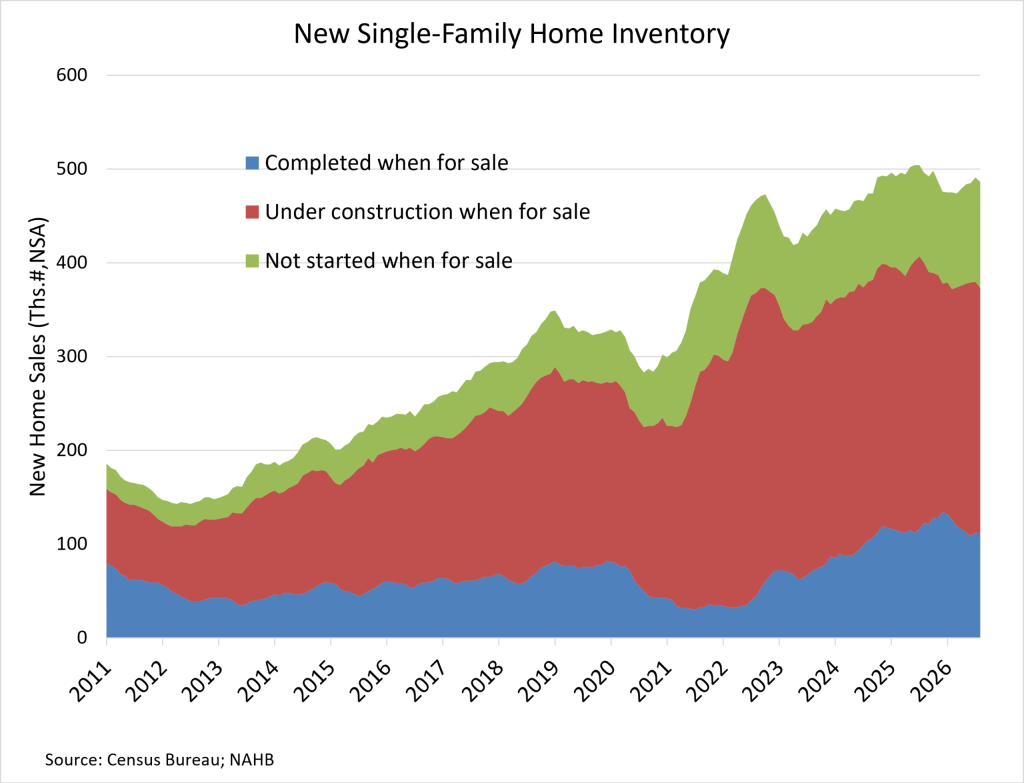
According to the U.S. Department of Housing and Urban Development and the U.S. Census Bureau, the sales of newly constructed single-family homes increased by 6.4% in August to a seasonally adjusted annual rate of 684,000.
This increase follows an upwardly revised July estimate.
This represented a 2.0% decrease from the previous year.
Regardless of the stage of construction, a new home transaction is recorded upon the signing of a contract or the acceptance of a deposit.
The seasonal adjusted annual rate represents the rate of sales that would occur over a 12-month period if the current conditions are maintained.
In August, the number of new single-family homes was 483,000 units, which was the same as in July.
However, it decreased by 2.0% from the previous year.
The months’ supply of new residences was at an elevated 8.5 months at the current sales pace, which is approximately the same as it was a year ago.
A balanced market is typically indicated by an inventory level of five to six months.
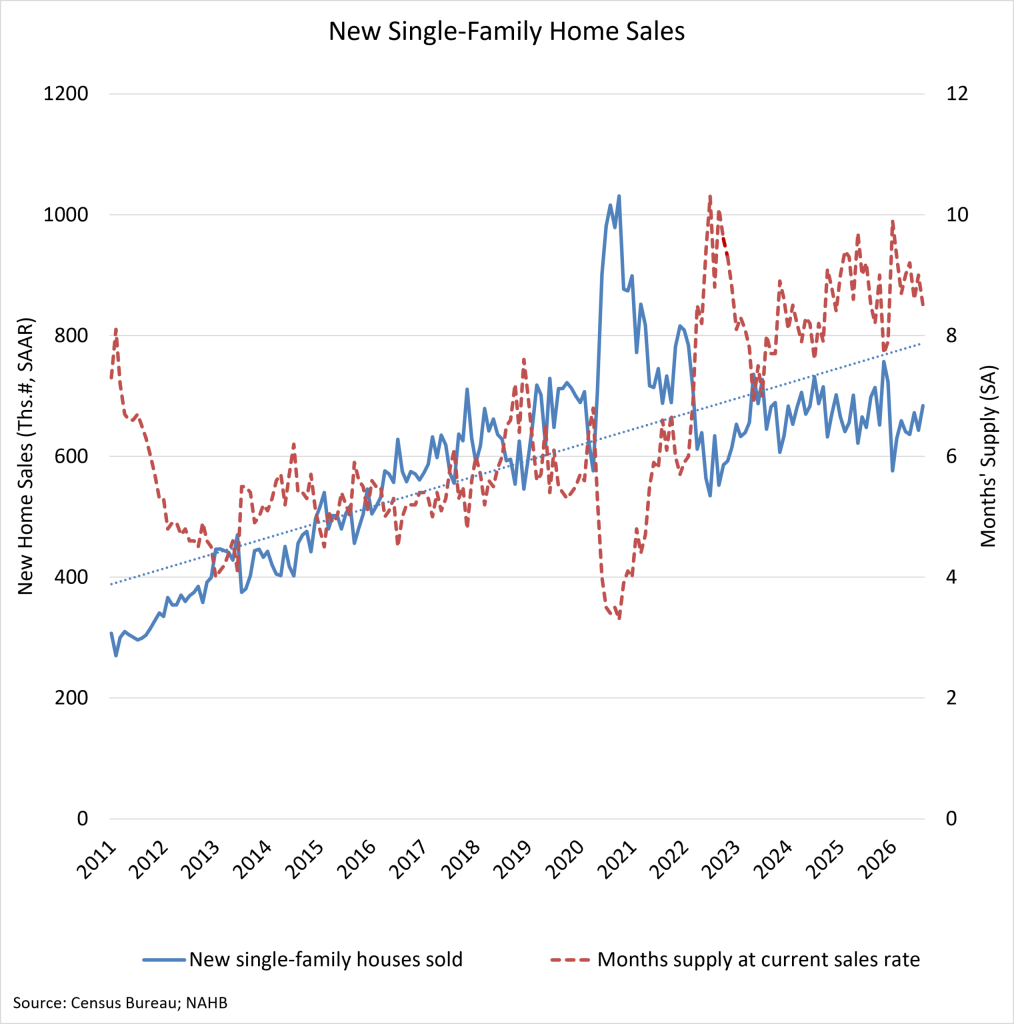
In recent months, the combined inventory of new and existing homes has increased, resulting in a total months’ supply of 5.3 months.
In recent months, inventory conditions in the existing home market have progressively improved.
The ongoing affordability concerns have been mitigated by the moderated prices in both markets, which has bolstered consumer demand.
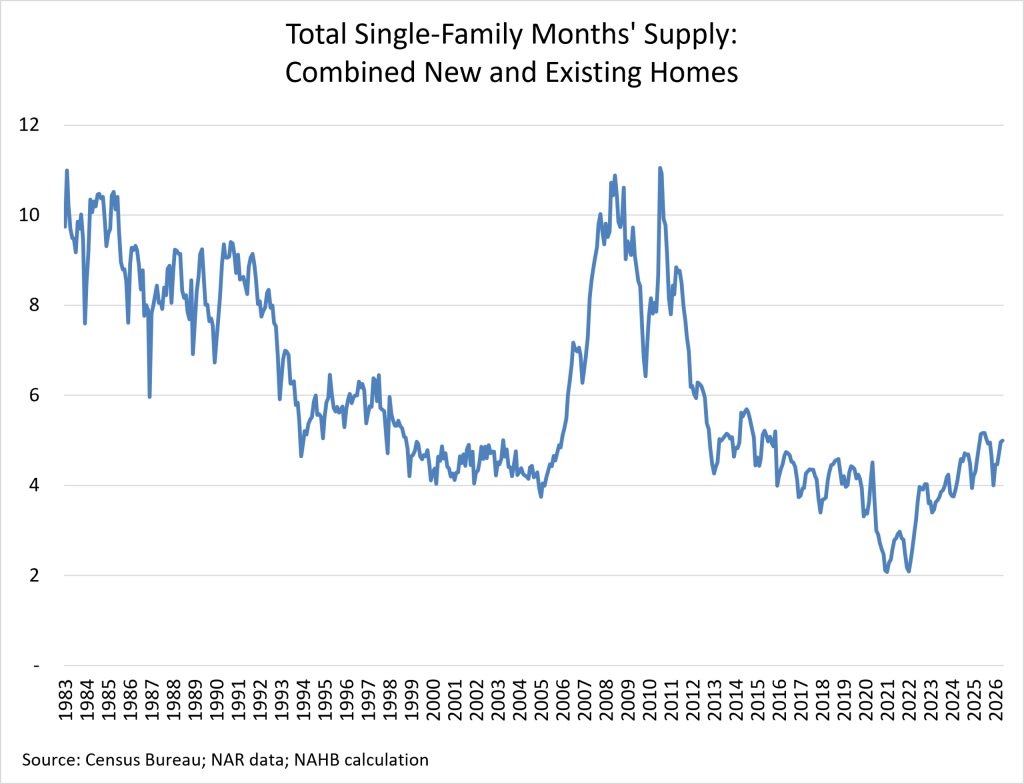
On a non-seasonally adjusted basis, there were 112,000 completed, ready-to-occupy homes available for sale at the end of August.
Homes that were completed comprised approximately one-quarter of the total inventory, while those that were still under construction constituted 54%.
Construction had not yet commenced on the remaining portion of the properties that were sold in August at the time the sales contract was signed.
Despite the decrease in sales activity, home prices remained relatively consistent, which was a result of the incentives offered by builders.
The median new home sale price was $393,700, which represents a 0.4% increase from July but a 5.8% decrease from the previous year. Half of all new home sales were comprised of homes priced between $300,000 and $499,999, while 22% of sales were priced below $300,000. This underscores the persistent affordability challenges faced by entry-level buyers.
The remaining 26% of sales were priced at or above $500,000.
It is important to observe that the proportion of residences priced below $300,000 has increased in recent months, while the proportion priced over $500,000 has decreased.
Mixed regional performance was observed in August.
The Midwest experienced the most significant monthly sales increase, with an 84.9% increase from July.
The South followed, with a 6.9% increase.
Conversely, the Northeast and West experienced a decline in sales, with the Northeast experiencing the most abrupt decline, with a 36.1% decrease from the previous month.
The West experienced a 15.2% decline.
In comparison to August 2025, the Midwest and the South experienced year-over-year increases in sales, with the Midwest experiencing a 22.5% increase and the South experiencing a 3.4% increase.
The Northeast experienced a 20.7% decline in sales, while the West experienced a 26.8% decline.
Regional trends were similarly inconsistent from year to year.
The Northeast experienced no change in the number of new home sales.
In the meantime, sales in the Midwest were down 0.6%, 1.0% in the South, and 10.0% in the West.
[Read more about this topic on eyeonhousing.org]