

Three-bedroom single-family homes had the highest share of starts since 2011 and remained the most common number of bedrooms among new residences.
The percentage of starts for four-bedroom homes fell for the third year in a row, but it remained significantly higher than the percentages for two-bedroom or less and five-bedroom or more homes.
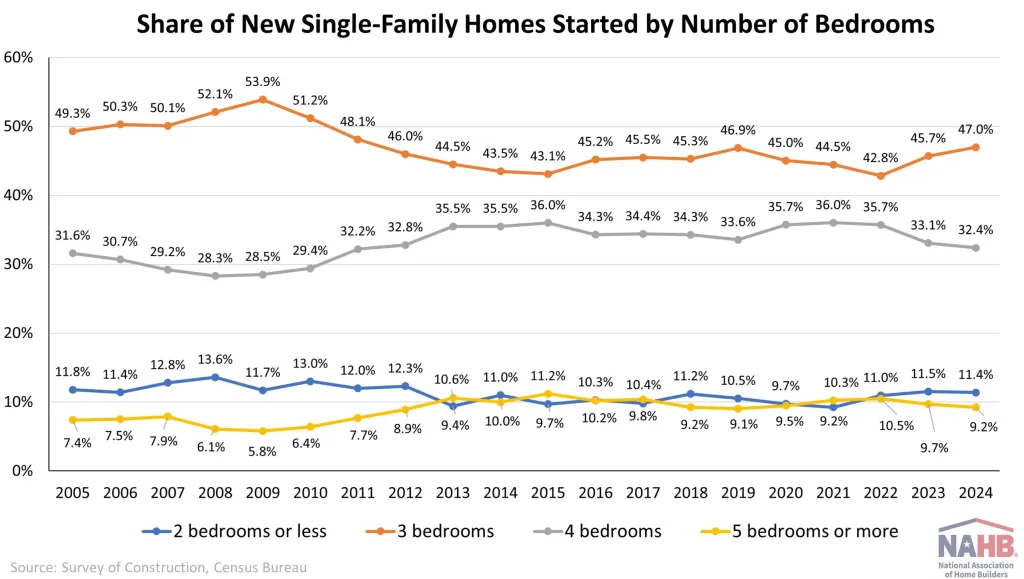
For the second consecutive year, the share of single-family homes with three bedrooms increased to 47.0%, the highest level since 2011.
All other bedroom number categories declined from 2023, with 4-bedroom residences falling the most, from 33.1% to 32.4%, a 0.7 percentage point drop from the previous year.
For the third year in a row, single-family houses with two or fewer bedrooms outnumber those with five or more.
US Divisions
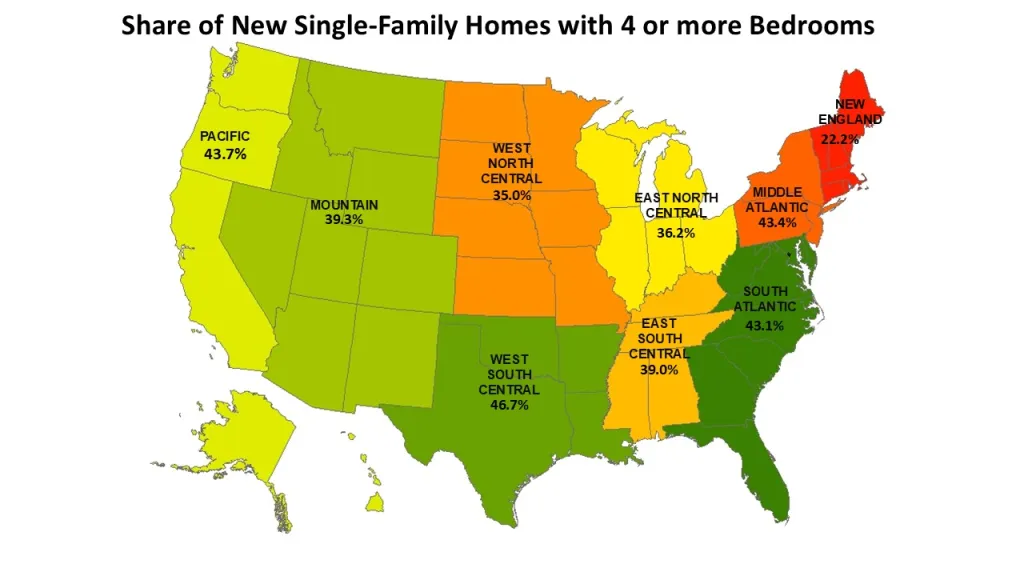
The share of new single-family homes with four or more bedrooms varies by census division in the United States.
The shares varied from 22.2% in the New England region to 46.7% in the West South Central division.
Coincident with the nationwide decline in the share of new single-family homes with four or more bedrooms, there are no divisions with a share greater than 50%.
Purpose of Construction
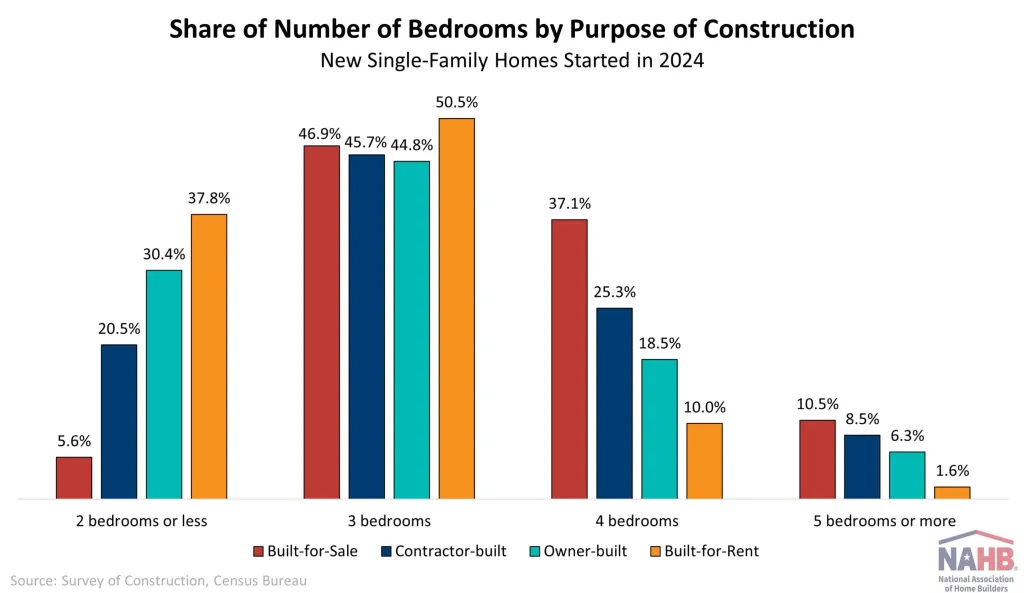
The number of bedrooms in new homes varies according to the purpose of building (built-for-sale, contractor-built, owner-built, or built-for-rent).
The majority of this discrepancy is due to homes with two or less bedrooms and those with four bedrooms.
For example, the proportion of new single-family dwellings with two or less bedrooms varies from 5.6% to 37.8% of residences developed for sale or rent.
Meanwhile, there is little difference in the objective of construction between three- and five-bedroom residences.
Except for built-for-sale homes, five- or more-bedroom homes accounted for the least share of starts across all construction types.
[Read more about this topic on Eyeonhousing.org]