

Prices increased for a variety of products and services that are utilized in residential construction.
However, transportation service prices experienced their most rapid increase since 2022, in addition to the primary factor of increasing energy prices.
Concurrently, the cost of constructing materials, exclusive of energy, experienced the most significant annual increase in the past three years, increasing by 3.7% from the previous year.
March’s 0.7% increase in the Producer Price Index for final demand was followed by a 1.4% increase in April.
On a year-over-year basis, ultimate demand prices increased by 6.0%.
The index for final demand services gained 1.2% in April, while the index for final demand products gained 2.0% during the same month.
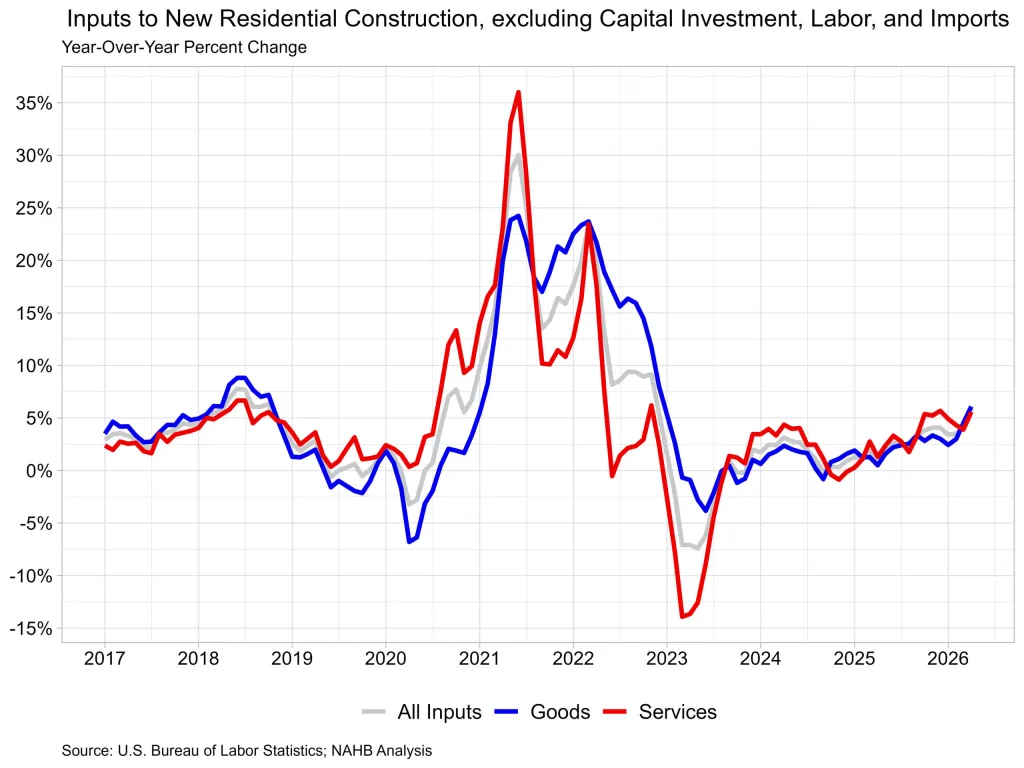
The input price index for new residential construction increased by 1.3% in April and was up by 5.9% from the previous year.
During the month, the cost of products used in new residential construction increased by 1.2%, and it increased by 6.1% from the previous year.
Similarly, the cost of services increased by 1.3% over the month and by 3.7% from the previous year.
Input Products
Regarding the inputs to the residential construction price index, the goods component is of greater significance, accounting for approximately 60% of the total.
April saw a 1.2% increase in the monthly price of input products for new residential construction.
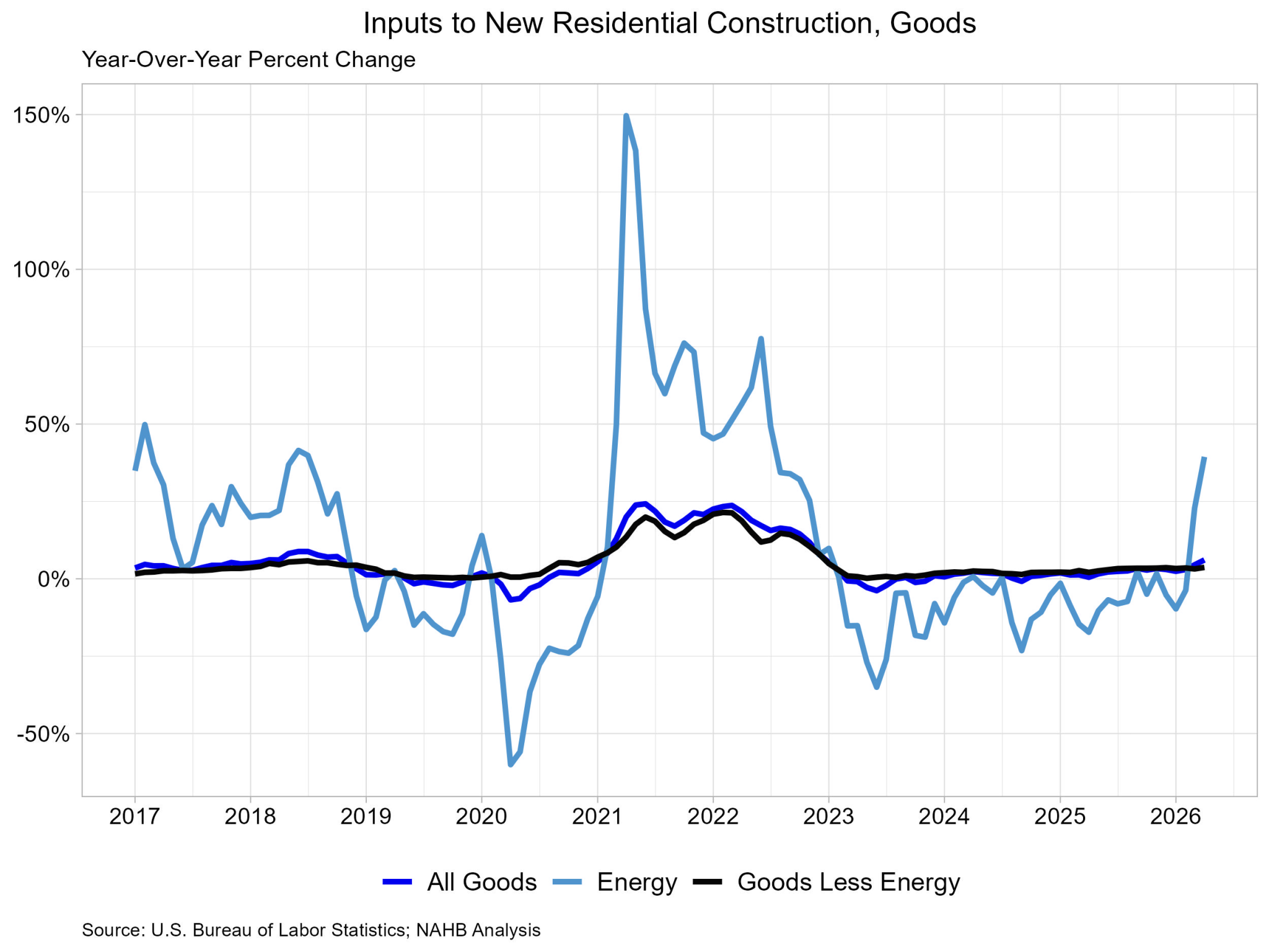
The residential construction index’s input goods can be further deconstructed into two distinct components: one quantifies energy inputs, while the other quantifies remaining goods.
The latter of these two components is a representation of the building materials used in residential construction, which represent approximately 93% of the goods index.
April saw a 13.8% increase in energy input prices, which were 39.4% higher than they were a year ago.
Compared to one year ago, building material prices increased by 3.7% and experienced a 0.1% increase in April.
Building material prices have maintained a growth rate exceeding 3.0% since July of the previous year.
The greatest year-over-year increase in input commodities was observed in No. 2 diesel fuel, with prices that were 74.4% higher than they were a year ago.
After a decline in March, asphalt prices increased by 18.0% compared to April 2025.
April saw a 1.1% increase in the price of softwood timber, which had been declining annually for several months.
Compared to March, fewer materials demonstrated annual price decreases.
Particleboard and fiberboard prices experienced a 12.0% decline, while softwood veneer/plywood prices experienced a 1.7% decline.
Input Services
It was reported that the prices of service inputs for residential construction increased by 1.3% in April.
On a year-over-year basis, service input prices increased by 5.6%.
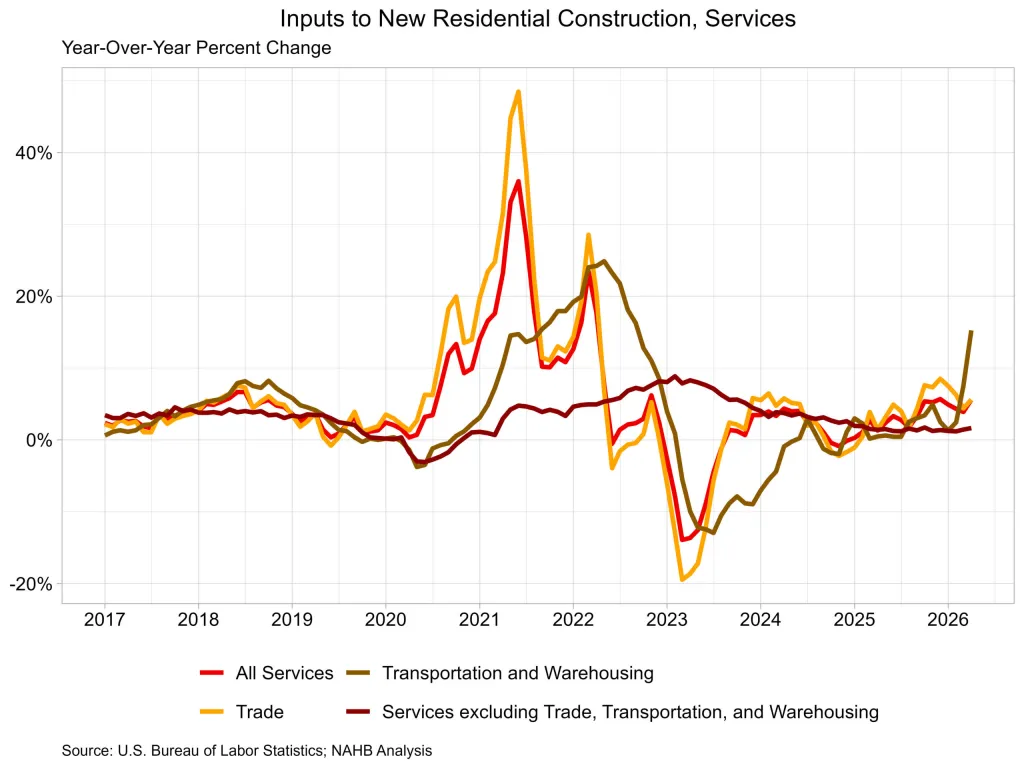
There are three distinct components of the price index for service inputs to residential construction: a trade services component, a transportation and warehousing services component, and a services excluding trade, transportation, and warehousing component (other services).
The most significant component is trade services, which account for approximately 60% of the total.
Other services represent approximately 29% of the total, and transportation and warehousing services consist of approximately 11%.
There was a 5.6% increase in the largest component, commercial services, from the previous year.
Transportation and warehousing services experienced a 15.3% increase in price, while other services experienced a 1.6% increase, year over year.
Long-distance motor carrying service prices increased by 10.4% in April and were 18.3% higher than a year ago.
Local motor carrying service prices rose by 1.4% in April and were 6.3% higher than a year ago.
The residential construction price index depicts these two transportation services as inputs.
[Read more about this topic on Eyeonhousing.org]