

In the fourth quarter of 2025, the median price of a new single-family home was $405,300, $9,600 less than the median price of an existing home, which was $414,900.
According to data from the United States Census Bureau and the National Association of Realtors (not seasonally adjusted – NSA), this is the third quarter in a row that existing home prices have topped new home prices.
New homes typically have a higher price than existing residences. From 2010 to 2019, this trend remained consistent, with an average difference of $66,000.
However, over the last five years (2020-2025), the disparity has shrunk dramatically, averaging only $23,300.
Notably, this relationship shifted in the second quarter of 2024, with existing home values outpacing new home prices in five of the previous seven quarters.
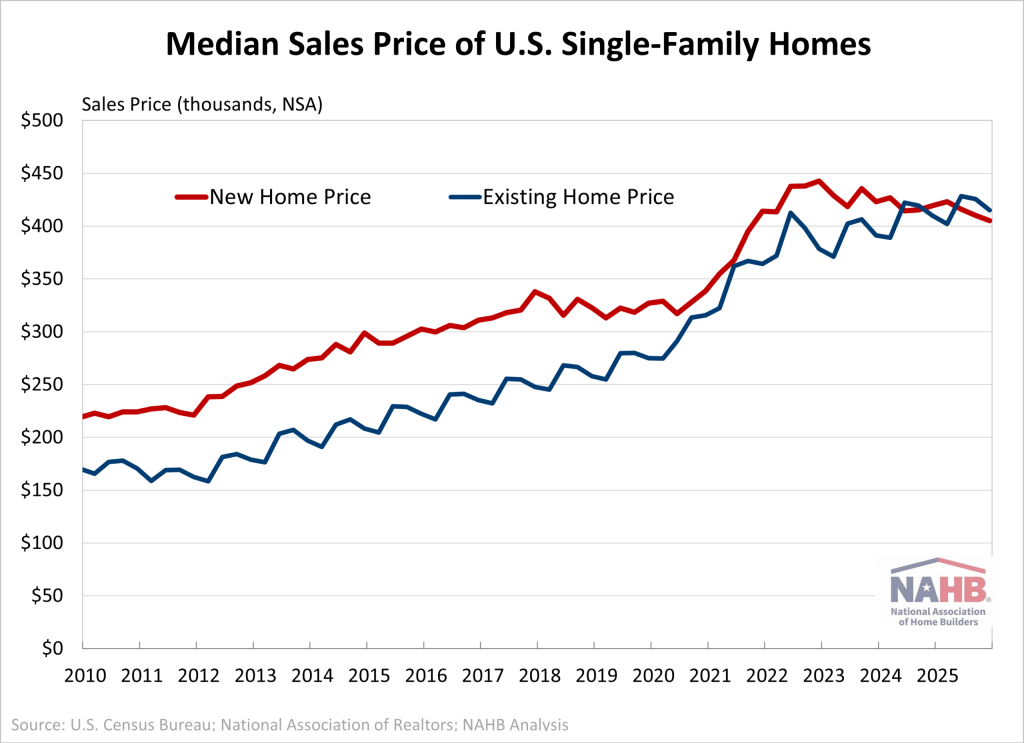
Prices for new and existing homes skyrocketed following the epidemic because to greater building costs and restricted supply.
While overall home prices remain high in comparison to historical norms, new home prices have slowed due to tactical builder business decisions, and existing home prices continue to rise due to tight supply and, in some locations, a lack of price discovery for existing homeowners.
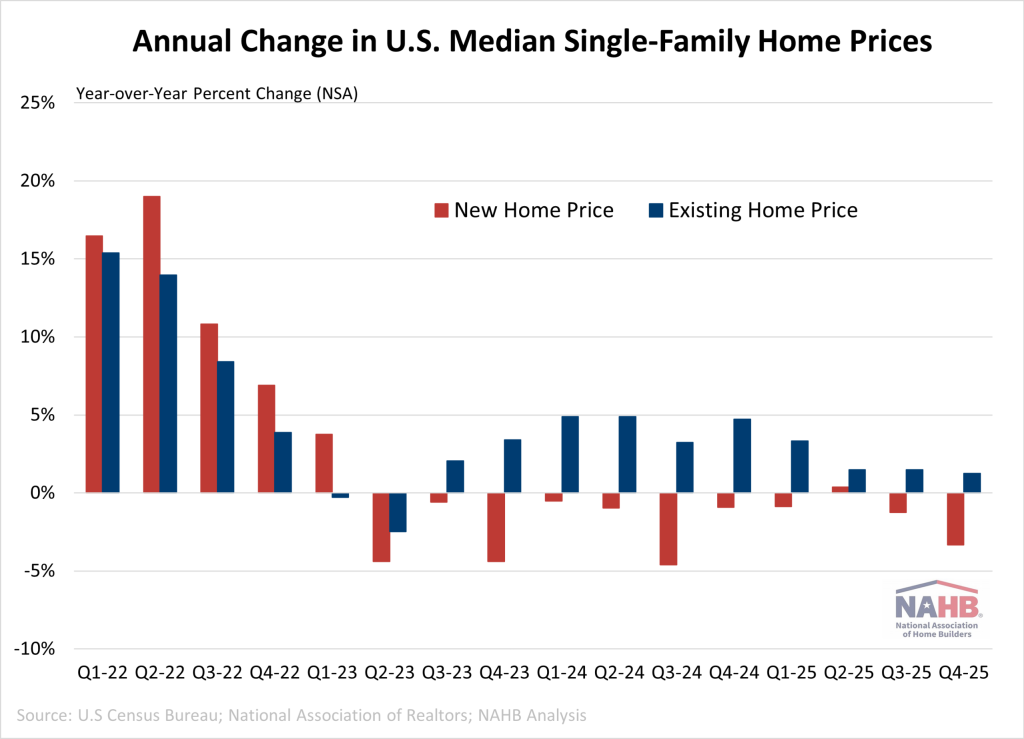
Indeed, the median price of a new single-family house sold in the fourth quarter of 2025 fell by 3.34% over the previous year.
For the past two years, the yearly growth rate in new home prices has been declining.
Meanwhile, the median price of existing single-family houses grew by 1.25% from a year ago.
For the past ten quarters, existing home prices have been rising year after year.
There are various reasons why new and existing homes are selling at similar prices.
Tight inventory continues to drive up prices for existing homes, as many homeowners who received cheap mortgage rates before the crisis are afraid to sell owing to the current high rates.
Meanwhile, new home pricing is more unpredictable; prices vary depending on the type and location of the homes being built.
Despite different industry issues, home builders are responding to affordability concerns by building on smaller sites, building smaller homes, and offering incentives.
Furthermore, policy influences have resulted in a shift in home building toward the South, which is associated with less priced housing.
This has occurred in a climate where construction costs, the primary driver of home prices, are continuing to grow.
The South had the lowest median new home price in the fourth quarter, at $366,100. The Midwest was close behind, at $377,900.
For existing homes, the Midwest had the lowest price at $317,200, followed by the South at $367,200.
The Northeast had the highest median price for new homes, at $799,000, while the West sold for $557,100.
For existing homes, the West was the most expensive region at $623,800, followed by the Northeast at $515,900.
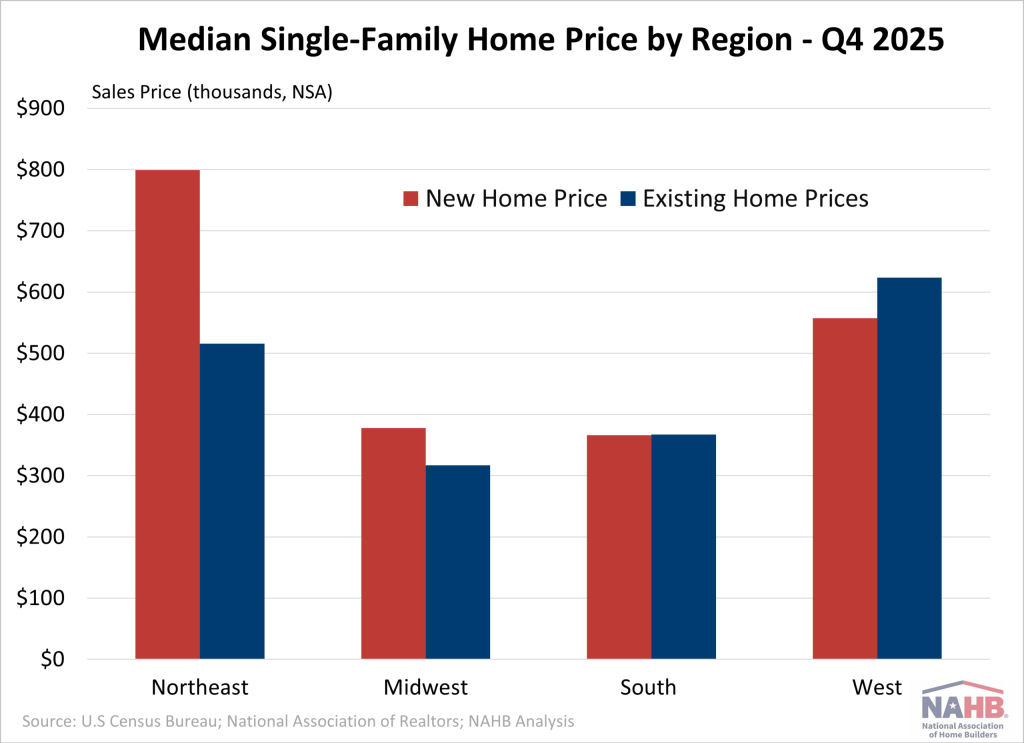
The new home price premium was most noticeable in the Northeast, where new homes sold for $283,100 more than existing homes.
Furthermore, in the Midwest, new homes sold for $60,700 more than older ones.
Existing homes were priced $66,700 higher than new homes in the West and $1,100 higher in the South, mirroring the national pattern.
[Read more about this topic on Eyeonhousing.org]