

The median price of a new single-family home in the first quarter of 2026 was $403,200, or $1,400 less than the median price of an existing home, which was $404,600.
According to data from the U.S. Census Bureau and the National Association of Realtors (not seasonally adjusted – NSA), this is the fourth consecutive quarter in which the prices of existing homes have surpassed those of new homes.
In general, new residences are priced higher than existing homes.
This relationship, however, reversed in the second quarter of 2024, with existing home prices surpassing new home prices in six of the previous eight quarters.
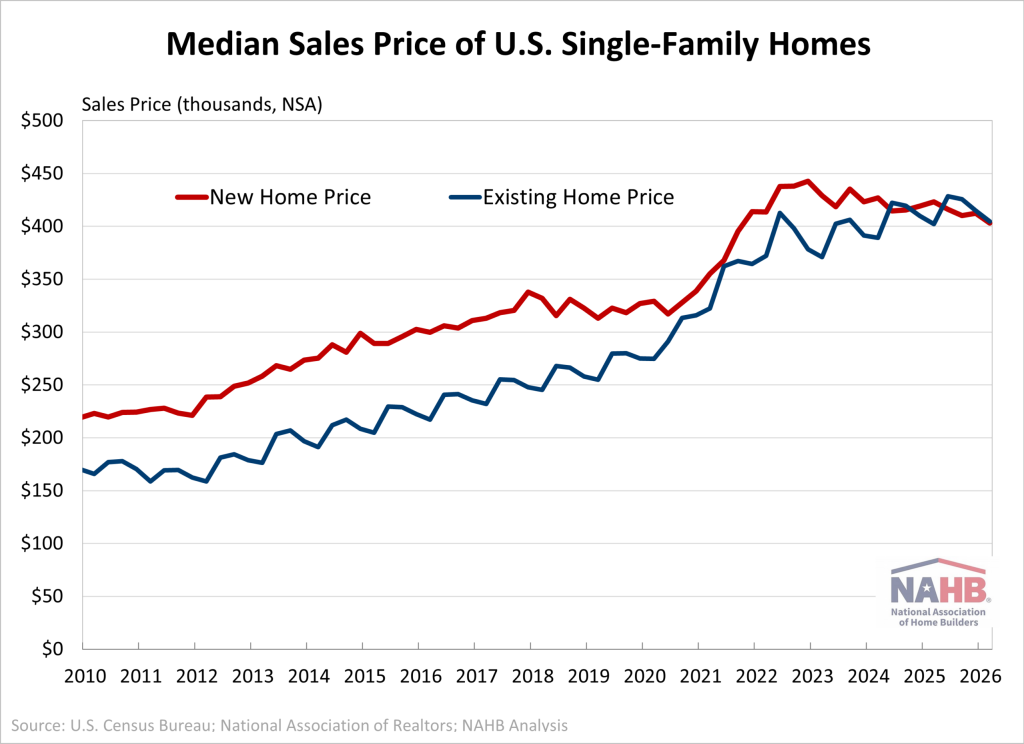
After the pandemic, the prices of both new and existing residences experienced substantial increases as a result of the limited supply and increased construction costs.
Although the price of new homes has moderated as a result of strategic business decisions made by builders, the price of existing homes continues to rise due to a lack of price discovery for existing homeowners in certain markets and a limited supply, despite the fact that overall home prices remain elevated in comparison to historical norms.
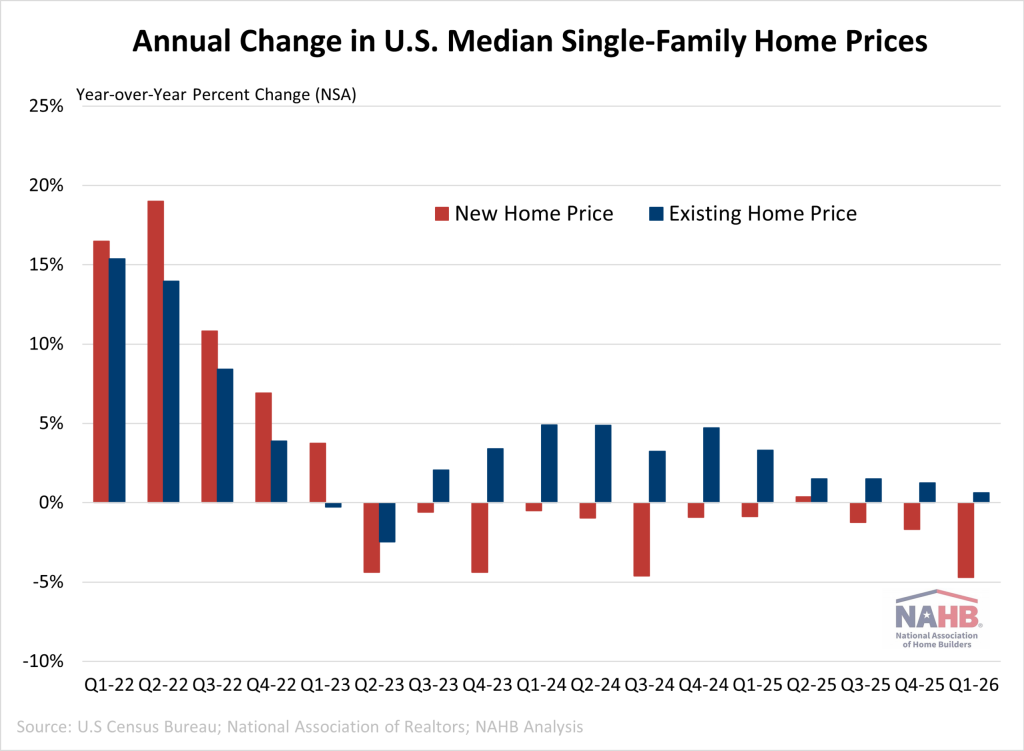
4.7% less than the previous year, the median price of a new single-family residence that was sold in the first quarter of 2026.
Since the second quarter of 2023, the annual growth rate of new dwelling prices has been decreasing.
Despite the fact that existing home prices have continued to increase year over year for the past 11 quarters, the annual growth rate has decreased from a maximum of 4.9% two years ago to a mere 0.6% in the first quarter of 2026.
There are numerous reasons why new and existing residences are being sold at comparable prices.
The current high interest rates are causing many homeowners who secured low mortgage rates during the pandemic to be hesitant to sell, which is contributing to the continued increase in prices for existing properties. This is due to the scarcity of available inventory.
In contrast, the pricing of new homes is more volatile, as it is influenced by the varieties and locations of the homes that are being constructed.
Home builders are addressing affordability challenges by constructing smaller homes, building on smaller lots, and offering incentives, despite the numerous challenges that the industry is currently confronting.
Furthermore, the South has experienced a transition in the construction of homes, which is attributed to the lower cost of living as a result of policy changes.
This has occurred in a context where the fundamental driver of property prices is the ongoing increase in construction costs.
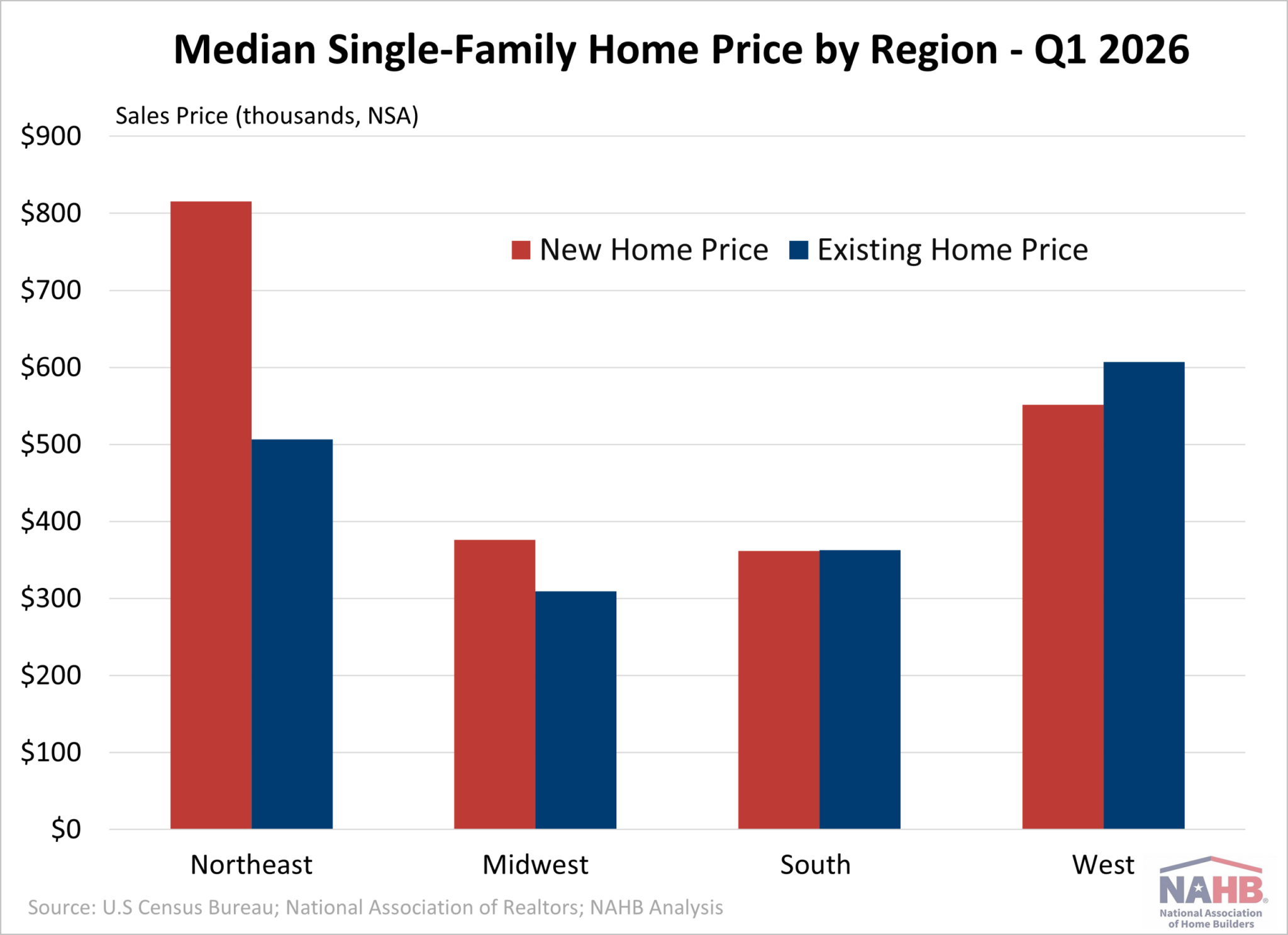
The Southern region was the least expensive for new residences in the fourth quarter, with a median price of $361,800. Subsequently, the Midwest followed closely behind at $375,900.
The Midwest and the South were the most affordable regions for existing properties, with a median price of $309,100 and $362,500, respectively.
The Northeast had the highest median price of $815,600 for new residences, while the West sold for $551,500.
The West was the most expensive region for existing residences, with a price tag of $607,000. The Northeast was the second most expensive region, with a price tag of $506,400.
In the Northeast, the new home price premium was most pronounced, with new homes selling for $309,200 more than existing homes.
Furthermore, in the Midwest, new homes were sold for $66,800 more than existing residences.
The West and South adhered to the national trend, with existing homes priced $55,500 higher than new homes in the West and $700 higher in the South.
[Read more about this topic on Eyeonhousing.org]